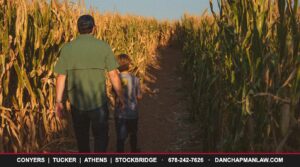
Hayrides under the stars, a corn maze with the whole family, a haunted house that makes your teenager scream louder than you do: fall in Georgia is hard to beat, and Georgia premises liability law is there for the rare day it goes wrong. Most of these outings end with nothing worse than a sticky caramel apple. But every season, some guests go home with a sprained ankle, a broken wrist, or worse, because something at the attraction wasn’t as safe as it should have been.
If you or your child got hurt at a corn maze, hayride, haunted attraction, pumpkin patch, or fall festival, Georgia’s premises liability law decides who is responsible. Here is how it works, in plain English, plus a few easy ways to keep your family’s fall fun on the fun side.
Georgia Premises Liability in a Nutshell
Premises liability is the area of law that covers injuries caused by unsafe conditions on someone else’s property. Under Georgia premises liability rules, how much care a property owner owes you depends on why you were there:
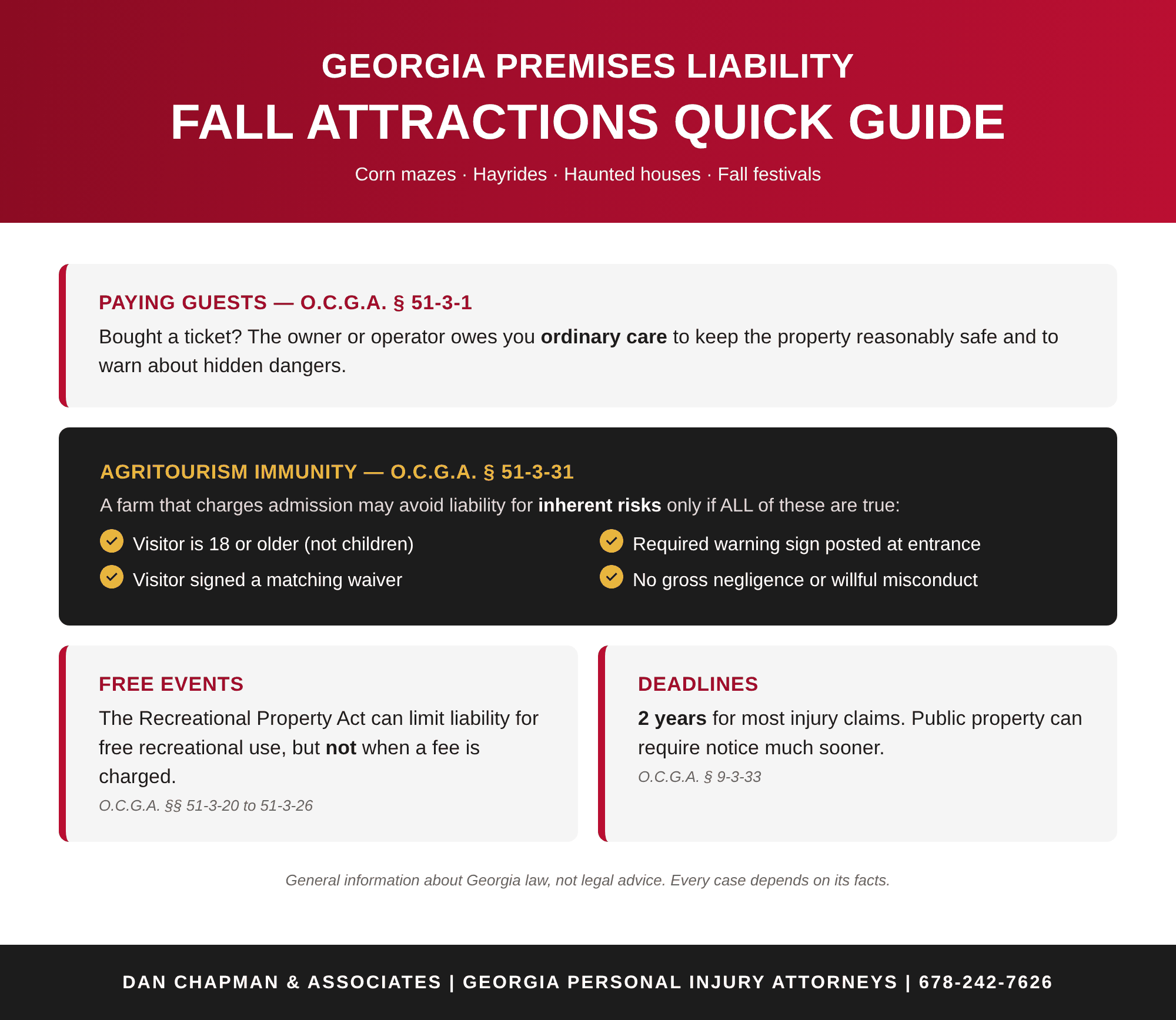
- Paying guests are “invitees.” When you buy a ticket to a corn maze, haunted house, or festival, the owner or operator owes you ordinary care to keep the premises and approaches reasonably safe (O.C.G.A. § 51-3-1). That includes fixing hazards they know about, or should know about, and warning you about dangers that aren’t obvious.
- Social guests are usually “licensees.” If you are there only with permission, and not for the owner’s business, the owner is generally liable only for willful or wanton conduct (O.C.G.A. § 51-3-2).
In most Georgia premises liability cases, the key question is who knew about the hazard. Georgia courts look at whether the owner knew or should have known about the dangerous condition, and whether the injured person, using ordinary care, could have seen it and avoided it. A hole hidden in a dark corn maze path is very different from a muddy patch in broad daylight.
Haunted Houses and Georgia Premises Liability: Scared Is Fine, Hurt Isn’t
Haunted attractions are designed to startle you, and nobody can sue because a chainsaw guy made them jump. Georgia premises liability law draws the line at hazards that go beyond the scare the attraction is selling. Here is what that looks like at each kind of fall attraction.
Haunted houses and haunted trails
- Trip hazards hidden in the dark: loose cords, uneven floors, unmarked steps, or props left in walkways
- Fog, strobe lights, or blackout rooms with no safe path through them
- Actors who grab, push, or chase guests in ways that go beyond the attraction’s own rules
- Blocked or unmarked exits, or overcrowded rooms
- Props, walls, or set pieces that collapse or aren’t secured
Hayride injuries and premises liability
- Wagons with no side rails, broken boards, or loose hay bales used as seats
- Too many riders for the wagon, or no rules about sitting down
- Drivers going too fast, taking sharp turns, or crossing rough ground or public roads
- Poorly maintained tractors, hitches, or wagons
- Unsafe loading and unloading, especially for small children
Corn maze and pumpkin patch injuries
- Holes, ruts, roots, and uneven ground, especially on night mazes with little or no lighting
- No staff, exit markers, or way to call for help inside the maze
- Muddy or poorly lit parking areas and walkways
- Unattended equipment, farm machinery, or animals near guest areas
A hidden hole or an unlit, unstaffed night maze is exactly the kind of hazard Georgia premises liability law expects a paying attraction to fix or warn about.
Rides, inflatables, and festival grounds
Many fall festivals add bounce houses, slides, or small carnival rides. Georgia’s Amusement Ride Safety Act (O.C.G.A. Title 34, Chapter 12) sets permit, inspection, and accident-reporting requirements for amusement rides. A ride that wasn’t inspected, was set up wrong, or was run by an untrained operator can point to both the festival and the ride company.
Waivers, Agritourism, and Georgia Premises Liability
Lots of farms and haunted attractions ask you to sign a waiver or post a big warning sign at the entrance. These matter, but under Georgia premises liability law they don’t automatically end a claim.
Georgia’s agritourism law. Under O.C.G.A. § 51-3-31 (see the statute summary from the National Agricultural Law Center), a landowner who charges admission for agritourism (like a working farm’s corn maze or hayride) can be immune from claims for injuries caused by the inherent risks of the activity. But that protection only applies when all of these are true:
- The injured person was 18 or older. The immunity does not cover children.
- A warning sign with the specific language the statute requires was posted at the main entrance.
- The visitor signed a waiver that mirrors that warning language.
- The owner’s conduct was not gross negligence or willful and wanton misconduct.
It also only covers inherent risks, the kind that come with farm activities no matter how carefully they’re run. A broken wagon rail or a hole the staff knew about for weeks is a different story.
Free community events. Georgia’s Recreational Property Act (O.C.G.A. §§ 51-3-20 to 51-3-26) can limit liability for owners who open their land to the public for recreation free of charge. That protection does not apply when the owner charges a fee for the activity, or when the owner willfully or maliciously fails to guard or warn against a dangerous condition.
Other waivers. Georgia courts will often enforce a clear, explicit waiver between adults, but a waiver generally can’t excuse gross negligence or intentional misconduct, and the exact wording matters. Keep a copy of anything you signed and let an attorney read it before you assume you’re out of luck.
Who Can Be Responsible Under Georgia Premises Liability?
In a Georgia premises liability case, responsibility may fall on more than one party, depending on what happened:
- The property owner, such as the farm, church, school, or venue
- The event operator, if a separate company runs the haunted house, maze, or hayride
- Ride and inflatable vendors that supply, set up, or operate equipment
- Security or staffing companies hired for crowd control
- An individual employee or actor whose conduct crossed the line
Georgia uses modified comparative fault (O.C.G.A. § 51-12-33). You can still recover if you were partly at fault, as long as you were less than 50% responsible, and your recovery is reduced by your share. Learn more in our post on how negligence and fault work in Georgia.
One important timing note: if the event was on public property, like a city park, county fairground, or public school, claims against a government entity often require a formal ante litem notice much sooner than the usual deadline. We explain those notice rules in our post on school bus accident liability in Georgia.
Easy Ways to Avoid a Fall Festival Injury
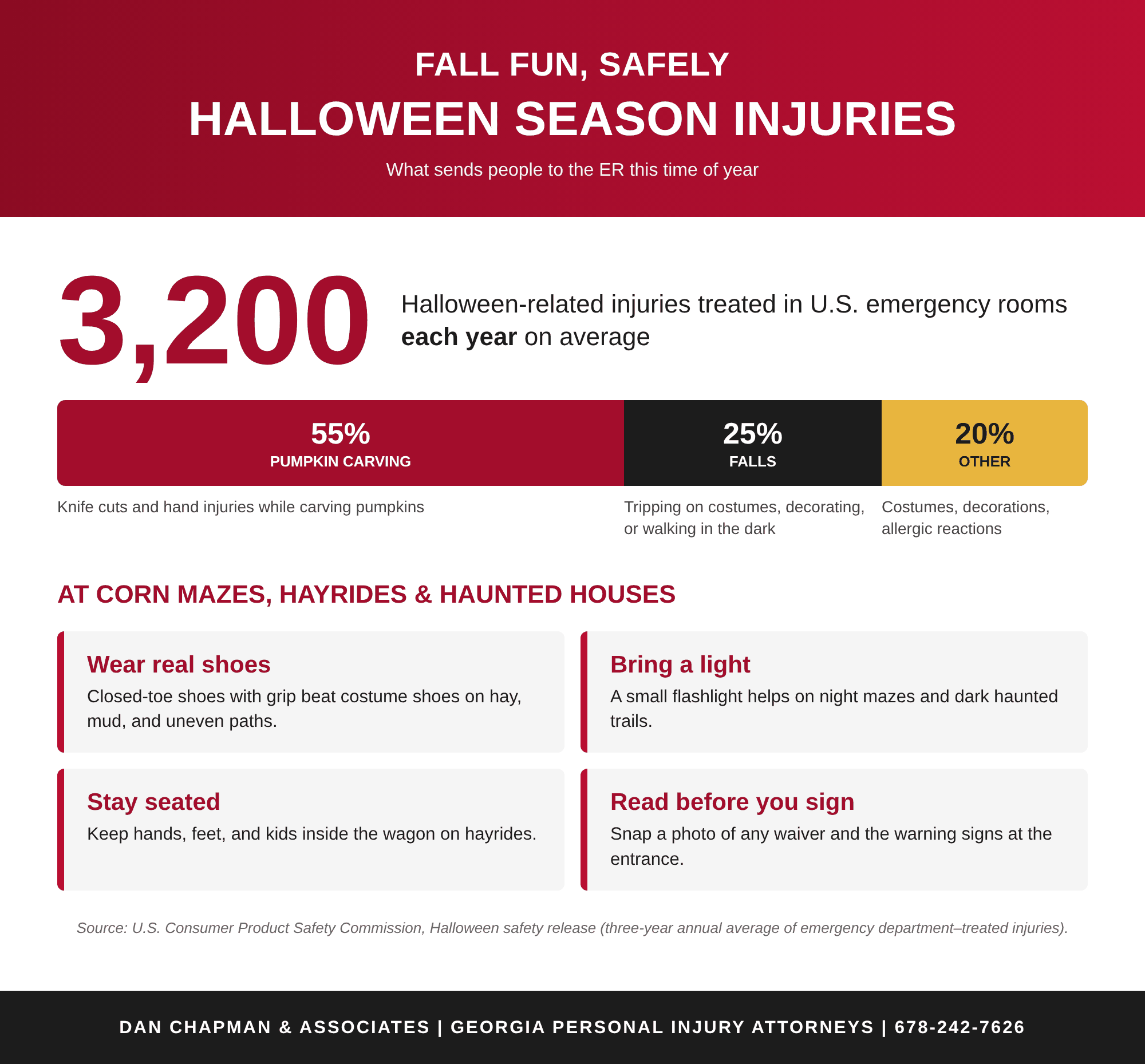
- Wear real shoes. Closed-toe shoes with good grip beat costume shoes in a corn maze or hay wagon.
- Bring a light. A small flashlight or phone light helps on night mazes and haunted trails.
- Stay seated on hayrides and keep hands, feet, and kids inside the wagon.
- Make a meet-up plan. Pick a spot in case anyone gets separated, and make sure kids know it.
- Check the age and health warnings at haunted attractions, especially for young kids or anyone with heart, back, or seizure concerns.
- Read before you sign. Take a photo of any waiver and of the warning signs at the entrance.
- Speak up. If you see a hazard, tell staff. You might save the next family a trip to urgent care.
What to Do After a Fall Festival Injury
- Get medical care first. Call 911 for serious injuries, and see a doctor even if it seems minor.
- Report it to staff or management before you leave and ask for a copy of the incident report.
- Take photos and video of the hazard, the lighting, the area around it, and your injuries.
- Get names and numbers of witnesses and the staff you spoke with.
- Keep your ticket, receipt, wristband, and any waiver. They show you were a paying guest and what you agreed to.
- Stay off social media about the incident. Insurance companies look. See how social media can affect an injury case.
- Talk to an attorney early. Georgia generally allows two years to file a personal injury claim (O.C.G.A. § 9-3-33), but seasonal attractions shut down, props get taken apart, and video gets erased quickly.
Here If You Need Us
We hope your family’s fall is full of hayrides, pumpkins, and happy screams. But if someone gets hurt because a property owner or operator didn’t take reasonable care, Dan Chapman & Associates can help you understand your Georgia premises liability options. We have represented injured Georgians for decades from offices in Conyers, Tucker, Athens, and Stockbridge, and we work on a contingency fee basis: you pay no attorney’s fee unless we recover for you.
Call 678-242-7626 or request a free case evaluation. And if you’re heading out on Halloween night, check out our Halloween and time change safety guide too.
Frequently Asked Questions
Does Georgia premises liability cover haunted house injuries?
Possibly. You can’t recover just because you were scared, but if you were injured by a hazard that went beyond the expected scares, like an unsecured prop, a hidden trip hazard, a blocked exit, or an actor who physically pushed you, the operator may be responsible under Georgia premises liability law.
Does a signed waiver mean I can’t make a claim?
Not necessarily. Georgia’s agritourism immunity only applies to adults, only covers inherent risks, and requires a posted warning sign and a matching signed waiver. No waiver generally protects an owner from gross negligence or intentional misconduct. Have an attorney review the exact wording.
My child was hurt on a hayride. Does the farm’s waiver apply?
Georgia’s agritourism immunity under O.C.G.A. § 51-3-31 applies to participants 18 or older, so it does not cover injuries to children. Other defenses may still come up, so it’s worth talking to a lawyer about the specific facts.
What if the fall festival was free?
Georgia’s Recreational Property Act can limit an owner’s liability when land is opened to the public for recreation free of charge. It does not apply when a fee was charged for the activity, or when the owner willfully or maliciously failed to guard or warn against a known danger.
How long do I have to file a claim?
Most Georgia personal injury claims must be filed within two years (O.C.G.A. § 9-3-33). Claims involving government property can require written notice much sooner, so it’s best to speak with an attorney quickly.
This article is general legal information about Georgia law, not legal advice, and reading it does not create an attorney-client relationship. Coverage questions and deadlines depend on your specific policy and the facts of your case. Speak with a licensed Georgia attorney promptly.